The automotive world is currently undergoing a monumental transformation as we transition from vehicles that require constant human supervision to those capable of navigating the world independently. At the heart of this revolution is Level 3 autonomy, a specific technical threshold where the car effectively becomes the primary driver under certain environmental conditions. Unlike Level 2 systems that demand your hands stay on the wheel at all times, Level 3 allows a driver to safely disengage from the task of steering and monitoring the road during specific scenarios, such as heavy traffic or highway cruising. This shift is made possible by an incredibly complex array of sensors, high-definition mapping, and artificial intelligence that can process millions of data points every second.
For many, this represents the true beginning of the autonomous era, offering a glimpse into a future where the stress of a daily commute is replaced by productive leisure time. However, this level of freedom comes with a significant responsibility for both the manufacturer and the software to ensure absolute safety and reliability. As more luxury brands integrate these features into their flagship models, the global standard for what a car can do is being rewritten in real-time. This guide will explore the most advanced Level 3 features currently redefining the global guest and driver experience on the open road. Mastering the understanding of these systems is essential for anyone looking to embrace the next generation of intelligent mobility.
The Architecture of Environmental Perception

For a car to take over the role of the driver, it must “see” the world with more precision and redundancy than a human ever could. This is achieved through a multi-layered sensor suite that provides a 360-degree digital shield around the vehicle.
A. High-Resolution Lidar and Laser Scanning
Lidar acts as the “eyes” of the system, sending out millions of laser pulses to create a precise 3D map of the surroundings. This allows the car to detect objects, pedestrians, and road boundaries even in total darkness or challenging weather.
B. Redundant Radar and Ultrasonic Arrays
While Lidar provides detail, Radar provides reliability by detecting the speed and distance of other vehicles through fog, rain, or snow. Ultrasonic sensors handle the close-range detection needed for lane changes and tight maneuvers in congested areas.
C. Artificial Intelligence and Neural Networks
The data from these sensors is fed into a central computer that uses deep learning to identify patterns and predict the behavior of other road users. This allows the car to make split-second decisions that prioritize safety and smooth traffic flow.
Intelligent Traffic Jam Pilot Systems
One of the most praised features of Level 3 autonomy is the ability to handle the grueling monotony of slow-moving traffic. These systems turn a frustrating gridlock into an opportunity for the driver to relax or focus on other tasks.
A. Hands-Off Low Speed Cruising
In heavy traffic at speeds usually below 60 km/h, the car takes full control of acceleration, braking, and steering. The driver can legally take their hands off the wheel and eyes off the road, provided they are ready to intervene if prompted.
B. Lane Centering and Gap Management
The system maintains a perfect center within the lane and adjusts the following distance based on the flow of traffic. It reacts much faster than a human to sudden stops, significantly reducing the risk of minor rear-end collisions.
C. Stop-and-Go Fluidity and Comfort
By optimizing the braking and acceleration curves, the AI ensures a much smoother ride for the passengers. This reduces the “jerky” motion often associated with manual driving in heavy traffic, enhancing the overall cabin experience.
Advanced Highway Pilot and Lane Change Logic
Moving beyond the city, Level 3 systems are now conquering the open highway, where higher speeds require even more sophisticated predictive algorithms and faster processing times.
A. Active Lane Change Assistance
When the car detects a slower vehicle ahead, it can autonomously check for clear space in the adjacent lane and execute a safe overtake. The system uses long-range rear-facing radar to ensure no fast-moving vehicles are approaching from behind.
B. High-Definition Map Integration
Level 3 cars use centimeter-accurate maps that include details like lane curvature, elevation, and the exact location of road signs. This allows the car to “anticipate” a sharp turn or an exit long before the onboard sensors can see it.
C. Dynamic Speed Adjustment for Curves
The AI analyzes the geometry of the road ahead and subtly adjusts the speed for upcoming curves or interchanges. This ensures that the vehicle stays within its optimal grip limits, providing a feeling of total stability and confidence.
The Human-Machine Interface and Handover Protocols
A critical component of Level 3 autonomy is the “Handover Request,” which occurs when the car reaches the limit of its capabilities. The way the car communicates with the human driver is a masterpiece of psychological and technical engineering.
A. Visual and Auditory Alert Tiers
When the system needs the driver to take over, it uses a series of escalating alerts, starting with subtle lights and progressing to urgent sounds. This ensures the driver has ample time to regain situational awareness before the system disengages.
B. Haptic Feedback and Seat Vibrations
In some high-end models, the seat or the steering wheel will vibrate to grab the driver’s attention without startling the passengers. This tactile communication is often the most effective way to alert a driver who might be distracted.
C. Emergency Fallback and Minimum Risk Maneuvers
If the driver fails to respond to the handover request, the car is programmed to perform a “minimum risk maneuver.” This typically involves slowing down, turning on hazard lights, and pulling over to a safe spot on the shoulder.
Precision Parking and Remote Valet Features
Level 3 autonomy isn’t just for the road; it also transforms the way we interact with our vehicles in parking environments. These features eliminate the stress of tight spaces and complex parking garages.
A. Remote Controlled Parking via Smartphone
Drivers can exit the vehicle and use a mobile app to guide the car into a narrow garage or parking spot. The car uses its full sensor suite to avoid obstacles and ensure it is perfectly aligned within the lines.
B. Memory Parking for Frequent Locations
The car can “learn” the path from the driveway to your specific garage spot. Once learned, you can simply stop at the gate, and the car will navigate the rest of the way and park itself automatically every time.
C. Autonomous Valet for Smart Garages
In specially equipped garages, the car can drop you at the entrance and then find its own parking space. When you are ready to leave, a simple tap on your phone brings the car back to the pickup point.
Predictive Hazard Detection and Collision Avoidance
The safety benefits of Level 3 autonomy extend far beyond just convenience. These systems act as a superhuman co-pilot that is always watching for hazards that a human driver might miss.
A. Pedestrian and Cyclist Collision Mitigation
The AI can distinguish between inanimate objects and living beings, predicting their likely path of movement. If a pedestrian steps into the road, the car can apply full braking force faster than any human reflex.
B. Cross-Traffic Alert and Intersection Support
When turning at a busy intersection, the car monitors for traffic coming from all directions, including blind spots. It will block an unsafe turn or apply the brakes if it detects a vehicle running a red light.
C. Evasive Steering in Critical Situations
If a collision is unavoidable by braking alone, the system can perform an autonomous swerve to find a clear path. This requires incredible processing speed to ensure the evasive move doesn’t result in a different accident.
Cloud Connectivity and Fleet Intelligence
Modern autonomous cars are not isolated units; they are part of a global network that shares information in real-time. This “fleet intelligence” allows every car to learn from the experiences of every other car on the road.
A. Real-Time Hazard and Weather Updates
If one car detects a patch of ice or a deep pothole, it instantly uploads that location to the cloud. All other cars in the area are then warned to adjust their speed or change lanes before they even reach the hazard.
B. Over-the-Air Software Enhancements
The autonomous brain of the car is constantly being updated with new code and improved algorithms. This means your car can actually become “smarter” and safer as it gets older, unlike traditional mechanical vehicles.
C. Collaborative Traffic Flow Optimization
Autonomous cars can communicate with each other to coordinate lane merges and maintain optimal spacing. This reduces the “accordion effect” in traffic, making the road more efficient for everyone, even manual drivers.
Interior Comfort and the Reimagined Cabin
When the car is doing the driving, the interior of the vehicle can be redesigned to prioritize relaxation and productivity. Level 3 autonomy is turning the car into a mobile living room or office.
A. Swiveling Seats and Flexible Layouts
Some concepts allow the front seats to turn and face the rear passengers when the car is in autonomous mode. This facilitates conversation and changes the social dynamic of a road trip.
B. Integrated Workstations and Digital Displays
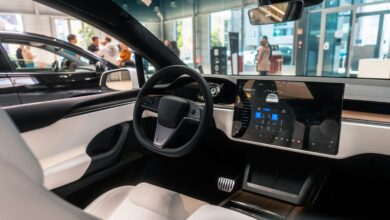
The dashboard can transform into a large panoramic screen for movies, video calls, or work documents. With the car handling the steering, the driver can catch up on emails or enjoy a cinematic experience.
C. Bio-Feedback and Wellness Monitoring
High-end autonomous cabins use sensors to monitor the heart rate and stress levels of the passengers. The car can then adjust the lighting, scent, and music to help you arrive at your destination feeling refreshed.
Regulatory and Ethical Challenges of Autonomy
The transition to Level 3 is not just a technical challenge; it is also a legal and ethical one. Governments around the world are currently debating how to handle liability and safety standards for autonomous vehicles.
A. Defining Liability in Autonomous Mode
One of the biggest questions is who is responsible if a Level 3 car is involved in an accident while the system is active. Most manufacturers are now stepping up to accept liability during autonomous operation to build consumer trust.
B. Ethical Algorithms and Decision Making
Engineers must program the AI to make difficult choices in split-second emergency scenarios. Developing a universal ethical framework for these “trolley problem” situations is a major focus for the global tech community.
C. Standardizing Safety Benchmarks Globally
For autonomous cars to move across borders, there must be a global standard for how these systems are tested and certified. International cooperation is essential to ensure that a Level 3 car is equally safe in Tokyo, Paris, or New York.
The Roadmap to Level 4 and Beyond
Level 3 is a significant milestone, but it is just one step on the journey toward full Level 5 autonomy, where the car can drive anywhere at any time without a steering wheel.
A. Expanding the Operational Design Domain (ODD)
Currently, Level 3 is limited to specific roads and weather conditions. Future updates will expand this “domain” to include complex city streets, rural roads, and more severe weather scenarios.
B. Integration with Smart City Infrastructure
Future autonomous cars will talk to traffic lights, stop signs, and even the road itself. This “V2X” (Vehicle-to-Everything) communication will be the final key to achieving total safety and efficiency.
C. The Shift Toward Mobility as a Service (MaaS)
As autonomy becomes more advanced, many people may stop owning cars altogether. We are moving toward a world of autonomous robotaxis that you can summon with a tap on your phone for a fraction of the cost of ownership.
Conclusion

The arrival of Level 3 autonomous features marks a definitive turning point in our relationship with the automobile. We are no longer just drivers; we are becoming passengers in a world of intelligent, self-aware machines. Safety remains the primary driver behind every sensor and algorithm developed for these sophisticated systems. The convenience of a hands-off commute is fundamentally changing the way we perceive distance and time. Redundancy in hardware and software ensures that the vehicle can handle the unexpected with superhuman precision.
Personalization of the cabin experience is turning the car into a true sanctuary for modern global travelers. Connectivity allows every vehicle to benefit from the collective knowledge of the entire autonomous fleet. Ethics and liability are the new frontiers that the industry must navigate to gain widespread public trust. The transition to a frictionless, autonomous future is a collaborative effort between tech giants and traditional car brands. Innovation in the human-machine interface ensures that the driver remains an informed and ready partner.
As these systems become more affordable, the benefits of autonomy will eventually reach every corner of the globe. We must remain observant and informed as these technologies continue to evolve and reshape our cities. The joy of driving is not being lost; it is being augmented by the peace of mind that comes with a digital co-pilot. True luxury in the modern age is the ability to reclaim your time and focus on what truly matters to you. The roadmap ahead is clear, leading toward a world where accidents are a thing of the past. Sustainable and autonomous travel is the cornerstone of the next great era of human mobility and exploration. Welcome to the future of motion, where the journey is just as rewarding and safe as the final destination.