The traditional concept of a car as a purely mechanical machine is rapidly fading into the history books, replaced by the era of the software-defined vehicle. In the past, if you wanted your car to perform better, you had to visit a mechanic for physical upgrades or buy a completely new model with a bigger engine. Today, the modern vehicle is more akin to a smartphone on wheels, capable of receiving complex instructions that alter its fundamental behavior. Manufacturers are now utilizing Over-the-Air (OTA) updates to transmit data directly to a car’s onboard computers, effectively upgrading the vehicle while it sits in your driveway. This technological leap allows for the continuous optimization of engine efficiency, battery management, and even safety protocols long after the car has left the factory floor.
For owners, this means their vehicle actually gets better with age, gaining new features and improved performance metrics without a single physical tool touching the chassis. We are witnessing a shift where the value of a car is increasingly tied to its digital architecture and the frequency of its software enhancements. As we look toward the future, these digital transformations will be the primary driver of automotive innovation and consumer satisfaction. This article will dive deep into the specific ways that code can transform your driving experience into something truly extraordinary.
The Evolution of the Electronic Control Unit (ECU)

Every modern car contains dozens of small computers known as Electronic Control Units. These units act as the “brains” of various systems, from the transmission to the power windows.
A. Centralized Computing Architectures
Newer vehicles are moving away from having many small computers to a few powerful central processors. This centralization makes it much easier for a single software update to improve multiple systems at once.
B. Real-Time Data Processing
ECUs process thousands of signals per second from sensors located all over the vehicle. Software updates refine the logic these computers use to interpret that data, leading to faster and more accurate mechanical responses.
C. Flash Memory and Reprogramming
The ability to rewrite the code on a chip without replacing the hardware is what makes OTA updates possible. This flexibility allows engineers to fix software bugs and improve performance remotely.
Boosting Powertrain and Engine Efficiency
One of the most impressive feats of a software update is its ability to extract more power or better fuel economy from the exact same mechanical engine. This is achieved through the precise management of combustion and energy flow.
A. Optimizing Fuel Injection Timing
Software controls exactly when and how much fuel is sprayed into the engine cylinders. By refining this timing, manufacturers can increase horsepower and reduce emissions simultaneously.
B. Turbocharger and Boost Management
For cars with turbos, software dictates how much air pressure is forced into the engine. Updates can smoothen the power delivery, eliminating “turbo lag” and making the car feel much more responsive.
C. Transmission Shift Logic Refinement
The “feel” of an automatic transmission is entirely governed by code. A software patch can make gear changes faster, smoother, or more intuitive based on the driver’s current style.
Maximizing Electric Vehicle Battery Range
For electric vehicle (EV) owners, software is the most critical factor in determining how far they can drive on a single charge. The Battery Management System (BMS) is constantly being tweaked to find the perfect balance between power and longevity.
A. Advanced Thermal Management Protocols
Software determines how the car heats or cools the battery pack during operation. Improved algorithms can reduce energy waste, effectively adding extra miles to the vehicle’s total range.
B. Regenerative Braking Calibration
The amount of energy captured when you lift off the accelerator is controlled by software. Updates can make this process feel more natural while increasing the amount of “free” energy returned to the battery.
C. Cell Balancing and Degradation Prevention
The BMS ensures that every individual cell in a battery pack is working at its peak. Software updates can introduce new ways to prevent chemical wear, extending the overall life of the battery.
Enhancing Safety and Advanced Driver Assistance Systems (ADAS)
Safety features like automatic braking and lane-keeping are heavily dependent on how the car perceives the world. Software updates act like a “vision correction” for the car’s sensors and cameras.
A. Refining Object Recognition Algorithms
AI software helps the car distinguish between a pedestrian, a cyclist, and a stationary trash can. Continuous updates help the car make fewer mistakes in complex urban environments.
B. Adaptive Cruise Control Smoothness
Early versions of adaptive cruise control could feel jerky or slow to react. Software patches allow the car to “predict” traffic flow more effectively, leading to a much more relaxed highway experience.
C. Automatic Emergency Braking (AEB) Updates
Manufacturers can update the AEB system to work at higher speeds or in worse weather conditions. This means your car becomes safer every time it connects to the internet.
Improving Interior Technology and User Experience
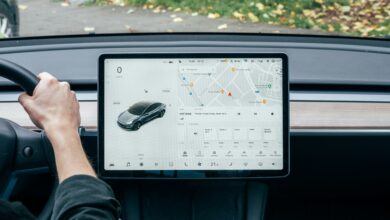
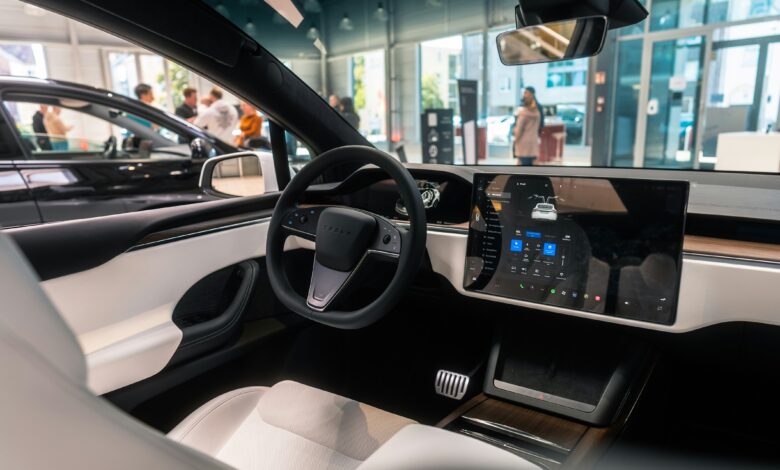
The “infotainment” system is the part of the car you interact with most, and it is often the first thing to receive software updates. These changes focus on making the cabin a more enjoyable and connected space.
A. Interface and Menu Layout Optimization
Software updates can simplify confusing menus and make the touch-screen response feel much faster. This reduces driver distraction and makes it easier to find the features you need.
B. Integration of New Digital Services
Updates can bring new apps, such as music streaming services or advanced navigation tools, to your car. This keeps the interior technology feeling fresh even several years after you bought the vehicle.
C. Voice Assistant and Natural Language Processing
As AI improves, your car becomes better at understanding your voice commands. Software updates allow you to talk to your car more naturally to adjust the climate or set a destination.
Dynamic Suspension and Handling Adjustments
If your car is equipped with an active suspension system, software can literally change how the car “rides” over bumps. This allows for a dual-personality vehicle that is both comfortable and sporty.
A. Magnetic Ride Control Tuning
In cars with electromagnetic dampers, software controls the stiffness of the suspension in real-time. An update can provide a “comfort mode” that is softer or a “track mode” that is much firmer.
B. Electronic Power Steering (EPS) Feel
The amount of “weight” or feedback you feel through the steering wheel is determined by code. Software can be used to make the steering feel more precise or easier to turn during parking.
C. Torque Vectoring and Stability Control
Software can manage how much power is sent to each individual wheel during a turn. This improves the car’s handling in corners and helps prevent skids on slippery surfaces.
Addressing Recalls and Technical Bugs Remotely
In the past, a software glitch meant a mandatory trip to the dealership, which was a huge inconvenience for owners. Now, many “recalls” can be handled entirely through a remote digital patch.
A. Cost-Effective Bug Squashing
Manufacturers can fix thousands of vehicles simultaneously without the overhead of a physical service center. This allows them to address minor issues much faster than they could in the past.
B. Proactive System Monitoring
Connected cars can send “heartbeat” data back to the factory to report on system health. If a common error is detected across the fleet, a software fix can be deployed before the owners even notice a problem.
C. Security Patches for Connected Features
As cars become more connected, they also become targets for hackers. Regular software updates provide the latest cybersecurity protections to keep your data and your vehicle safe.
Personalization and Custom Performance Profiles
Software allows for a level of personalization that was never possible with mechanical tuning. Owners can often choose how they want their car to behave based on their specific needs.
A. Customizable Drive Modes
Many cars now feature “Individual” modes where you can mix and match settings for the engine, steering, and suspension. Software updates often add new modes, such as a “Valet Mode” or a “Snow Mode.”
B. Performance Upgrades as a Service
Some brands offer “performance boosts” that can be purchased and downloaded instantly. This allows you to unlock extra acceleration or higher top speeds whenever you choose.
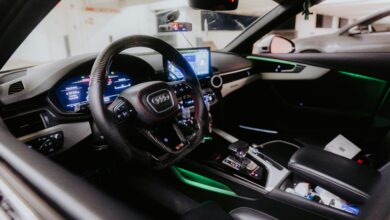
C. Ambient Lighting and Sound Design
The “sound” of an electric car or the color of the cabin lights can be changed via software. This allows you to customize the emotional atmosphere of your vehicle to suit your personality.
The Role of Artificial Intelligence in Continuous Learning
The most advanced vehicles use AI to learn from the driver and the environment. This means the software isn’t just being updated by engineers; it is also learning on its own.
A. Adaptive Driver Profiles
The car can learn your favorite routes, your preferred cabin temperature, and even your driving style. It then uses this data to optimize systems for your specific habits.
B. Predictive Maintenance Alerts
AI can analyze sensor data to predict when a part might fail before it actually does. The software can then alert the driver to schedule service, preventing an expensive breakdown on the side of the road.
C. Fleet Intelligence and Shared Data
When one car encounters a new type of obstacle, it can share that data with the entire fleet. This “collective learning” makes every car with that software version smarter and safer.
Environmental Impact and Sustainability Benefits
Software updates aren’t just good for performance; they are also a win for the environment. By making existing cars more efficient, we can reduce the total carbon footprint of the transportation sector.
A. Extending the Lifespan of Existing Vehicles
By keeping older cars feeling modern and efficient through software, people may choose to keep their cars longer. This reduces the demand for new vehicle production and the raw materials it requires.
B. Lowering Carbon Emissions via Efficiency
Every software-driven improvement in fuel economy or battery range directly reduces the amount of energy the car consumes. Over millions of miles, these small digital tweaks result in a massive reduction in emissions.
C. Optimizing Charging During Green Energy Peaks
Software can tell your EV to charge only when renewable energy is most abundant on the grid. This ensures that your car is running on the cleanest power possible.
Conclusion

Software updates have permanently changed the way we think about vehicle ownership and performance. The mechanical limits of the past are being expanded by the infinite possibilities of digital code. Every update brings a new opportunity for safety, efficiency, and driving enjoyment to your car. Owners can now enjoy a vehicle that evolves and improves over time rather than just wearing out. The integration of artificial intelligence is making our cars smarter and more intuitive with every mile.
Energy management in electric vehicles has reached a new peak thanks to sophisticated digital control. Safety systems are becoming more robust as they learn from the collective data of the global fleet. The convenience of remote updates saves time and reduces the need for frequent visits to a mechanic. Sustainability is improved when we can upgrade the performance of a car without replacing its physical parts. The cabin experience is being transformed into a high-tech sanctuary tailored to the individual. Performance is no longer a static number but a dynamic quality that can be tuned on the fly. We are moving toward a future where the software is just as important as the engine itself.
Connectivity is the bridge that allows our vehicles to stay at the cutting edge of modern technology. The relationship between the driver and the machine is becoming more conversational and responsive. True innovation in the automotive world is now happening in the digital realm first and foremost. Your next car will not just be a mode of transport; it will be a continuously improving digital asset. The journey toward a fully software-defined future is making the road a safer and more exciting place.